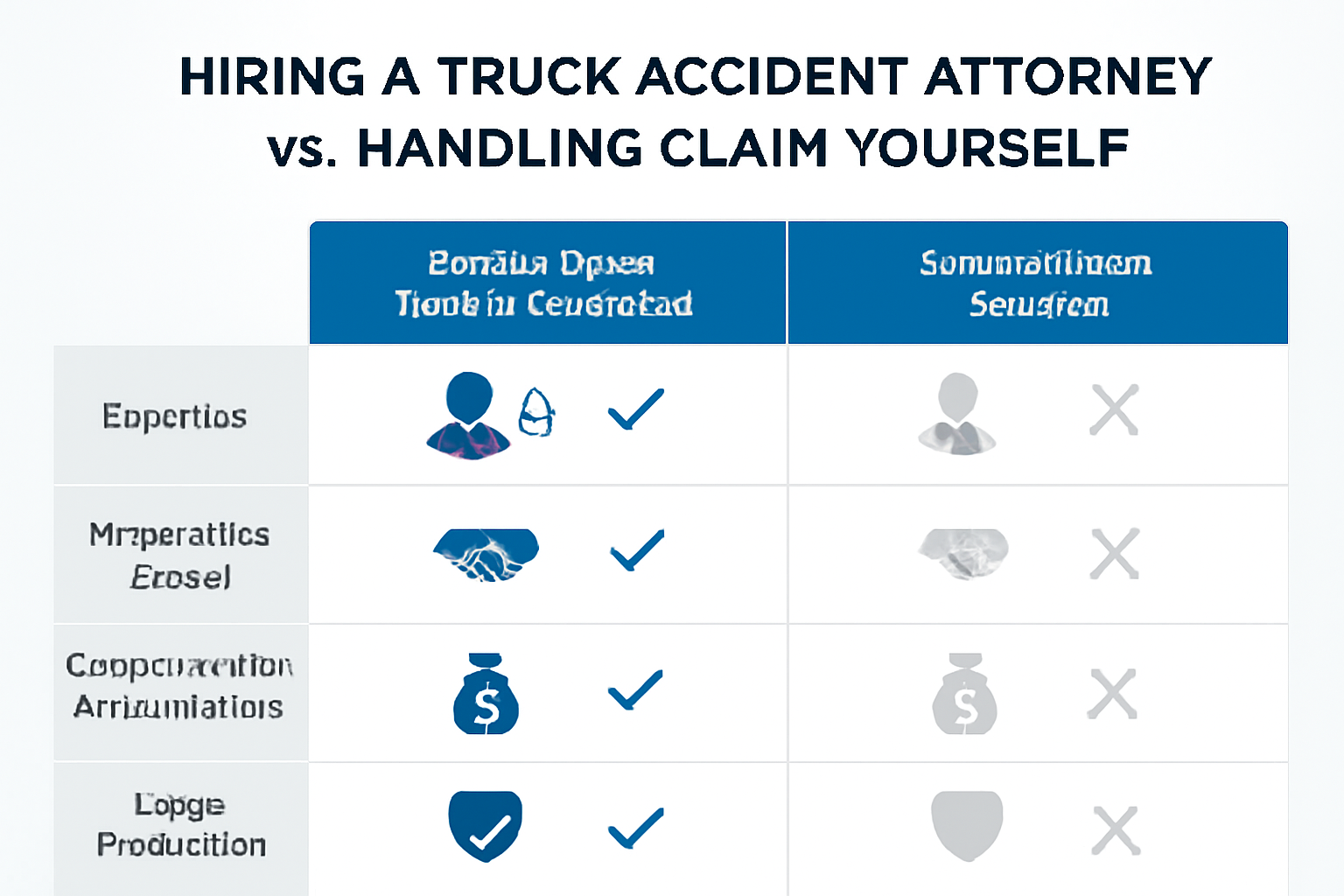
If you or a loved one has been involved in a truck accident, the legal aftermath can quickly become overwhelming. Truck accidents differ greatly from typical car crashes due to the size, weight, and regulations involved. That’s why hiring a specialized truck accident attorney is critical — to ensure your rights are protected, you understand your options, and you receive the compensation you deserve.
What Makes Truck Accident Cases Different?
Trucking companies operate under strict federal and state regulations, including rules around driver hours, vehicle maintenance, and cargo load limits. These complexities mean that truck accident claims often require investigation into:
-
Compliance with Federal Motor Carrier Safety Administration (FMCSA) regulations
-
Truck driver’s hours-of-service logs to identify fatigue
-
Vehicle maintenance and inspection records
-
Cargo securement and loading procedures
-
Involvement of multiple liable parties — driver, trucking company, cargo owner, or manufacturer
Without specialized legal knowledge, it’s challenging to pinpoint liability or navigate claims with insurance companies.
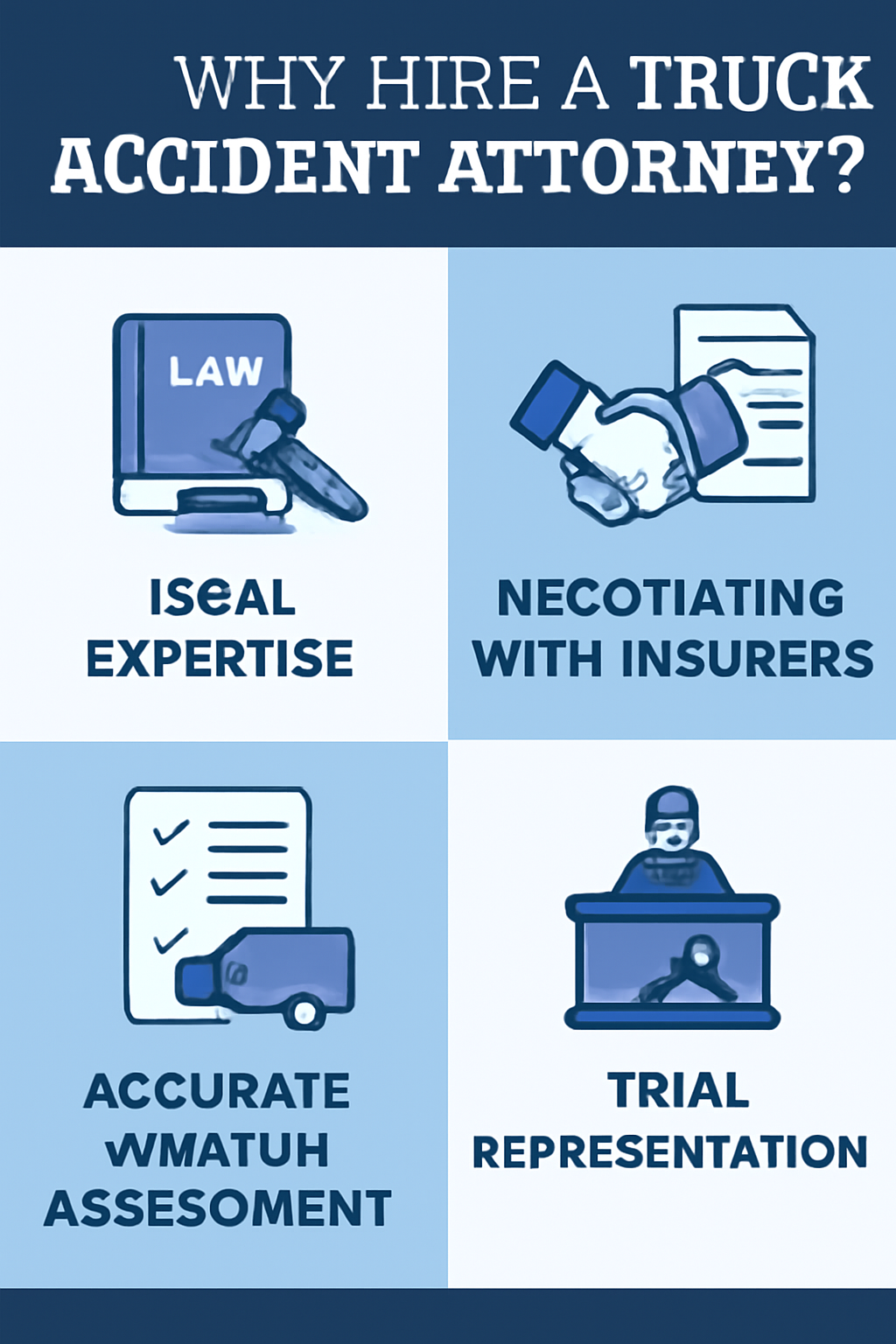
Why You Should Hire a Truck Accident Attorney
Expertise in Complex Trucking Laws
Truck accident attorneys understand the nuances of trucking industry laws and how to collect critical evidence, including black box data and eyewitness testimony. This expertise strengthens your case and helps uncover negligent parties.
Negotiating with Powerful Insurance Companies
Insurance firms for trucking companies often have deep pockets and aggressive legal teams. A skilled attorney levels the playing field by handling settlement negotiations or, if necessary, litigating for maximum compensation.
Accurate Damage Assessment
Beyond immediate medical bills, a truck accident attorney considers long-term impacts like lost wages, rehabilitation costs, pain and suffering, and future care needs — ensuring all damages are calculated in claims.
Trial Experience if Needed
While many cases settle out of court, some require taking the case to trial. Truck accident attorneys prepare you thoroughly for court, maximizing your chances of a favorable verdict.
Steps to Take After a Truck Accident
-
Ensure Safety and Report to Authorities: Immediate medical care is paramount. Call 911, even if injuries seem minor.
-
Document the Scene: Take photos, gather witness contacts, and collect driver and truck details.
-
Avoid Discussing Fault: Refrain from admitting blame or making statements to insurance adjusters without legal counsel.
-
Seek Legal Consultation: Contact a specialized truck accident attorney promptly to preserve evidence and build your case.
How Truck Accident Attorneys Maximize Your Settlement
-
Conduct an independent investigation and hire accident reconstruction experts if needed
-
Obtain complete trucking company records and driver logs
-
Identify all liable parties, including 3rd parties in multi-vehicle collisions
-
Evaluate all damages, including emotional distress and diminished quality of life
-
Negotiate aggressively with insurance companies on your behalf
Their goal is to remove the guesswork and ensure you receive full compensation — from medical expenses to lost income and pain endured.
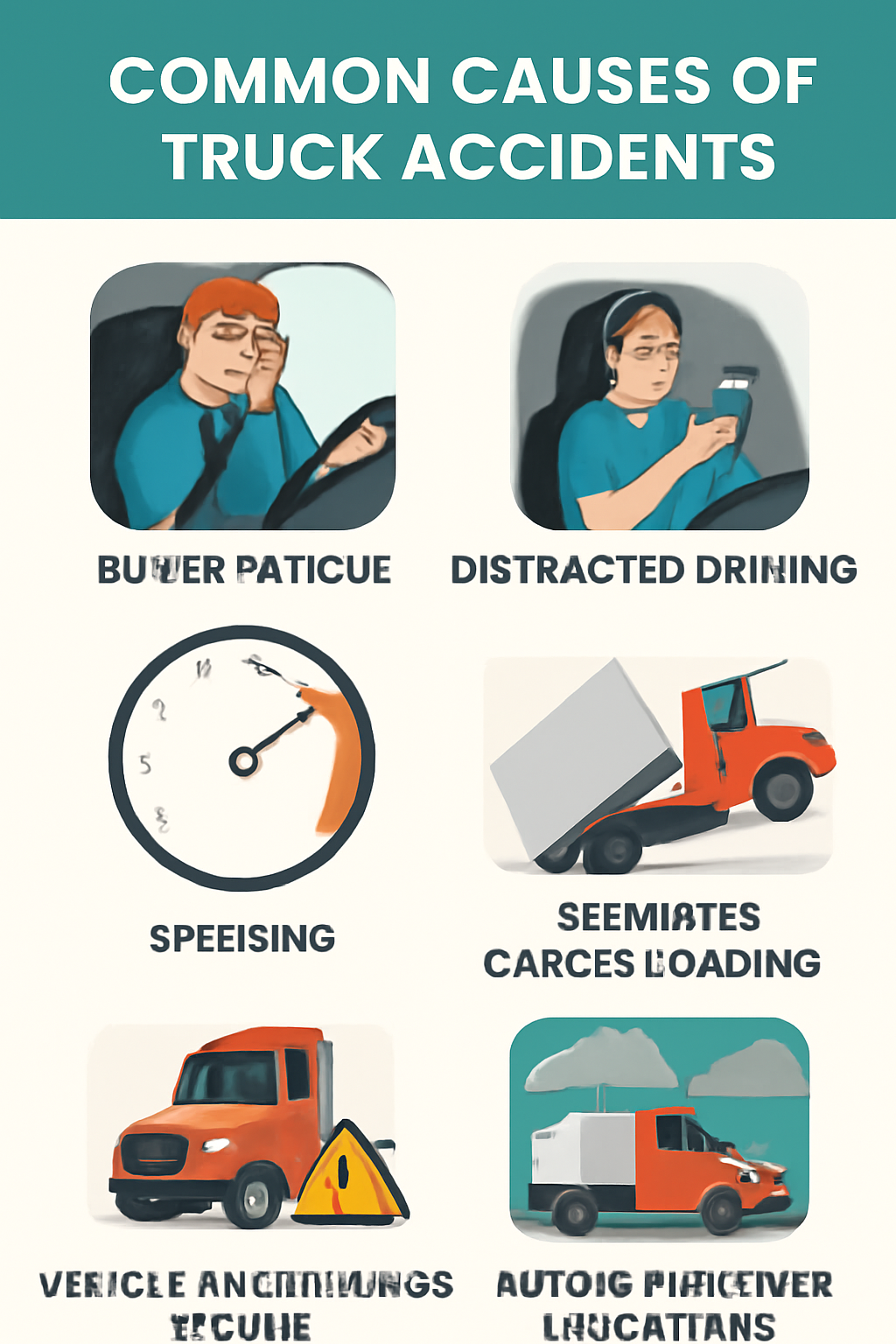
Common Causes of Truck Accidents
-
Driver fatigue and hours-of-service violations
-
Distracted driving (e.g., cell phones, GPS)
-
Speeding and reckless driving
-
Improper cargo loading leading to spillage or imbalance
-
Vehicle mechanical failures due to poor maintenance
-
Weather and road hazards
Understanding the cause helps attorneys pursue the right parties and evidence for your claim.
Selecting the Right Truck Accident Attorney
Look for:
-
Proven experience in truck accident law and litigation
-
Knowledge of local and federal trucking regulations
-
Track record of successful cases and satisfied clients
-
Transparent fee structures, often contingency-based (no win, no fee)
-
Clear communication and empathy for your situation
Taking time to choose the right attorney can substantially impact your claim outcome.
Here Important Question must to know
How long do I have to file a truck accident claim?
Statutes of limitations vary by state but typically range from 1 to 3 years. Acting swiftly protects your rights.
Will my case go to trial?
Most truck accident cases settle out of court, but attorneys prepare for trial if necessary to maximize compensation.
Can I handle the claim myself?
Due to trucking laws’ complexity and insurance pressure, self-representation often leads to undervalued settlements or claim denials.
What should I do immediately after a truck accident?
First, ensure your safety and call 911 for medical help and police. Take photos of the scene, exchange contact and insurance details with the truck driver, and collect witness information. Avoid admitting fault or discussing the accident with insurance adjusters without legal advice. Seek medical attention promptly, even if injuries seem minor. Contact a specialized truck accident attorney to protect your rights and guide next steps.
How do I find the best truck accident attorney near me?
Look for attorneys experienced specifically in truck accident law with a proven track record of successful settlements or verdicts. Check client reviews, ask for referrals, and verify credentials. Ensure they offer free consultations and work on contingency fees (no win, no fee). Local attorneys understand regional laws and courts, which is beneficial. Schedule consultations to assess communication and trust.
What evidence is needed to prove fault in a truck accident case?
Key evidence includes: police reports, truck driver logs (hours of service), vehicle maintenance records, black box data, witness testimony, and scene photographs. Expert accident reconstruction may be used to prove negligence. This evidence helps identify violations of trucking regulations or driver error, strengthening your claim against the responsible parties.
How long do I have to file a claim for a truck accident injury?
Statutes of limitations vary by state but generally range from 1 to 3 years. Filing promptly is critical to preserve evidence and legal rights. Consult an attorney immediately to ensure timely claim submission and avoid dismissal due to missed deadlines.
Can I sue a trucking company for driver negligence?
Yes, trucking companies can be held liable for driver negligence if they failed in hiring, training, or supervising drivers or violated safety regulations. Many truck accidents involve multiple liable parties including the driver, employer, cargo owner, or manufacturer.
What compensation can I expect from a truck accident settlement?
Settlements typically cover medical expenses, lost wages, rehabilitation costs, property damage, pain and suffering, and possibly punitive damages if gross negligence is proven. Compensation amounts vary based on injury severity and case complexity.
How do truck accident lawyers negotiate with insurance companies?
Attorneys use evidence-backed claims to negotiate fair settlements, often starting with demand letters detailing damages. They counter low offers and may prepare for litigation to strengthen bargaining power. Experienced lawyers know insurance tactics and can advocate effectively to maximize compensation.
What are the most common causes of truck accidents?
Common causes include driver fatigue, distracted driving, speeding, improper cargo loading, vehicle maintenance failures, and adverse weather conditions. Regulatory violations like hours-of-service breaches frequently contribute to accidents.
Is it better to settle or go to trial in a truck accident lawsuit?
Most cases settle out of court to avoid lengthy trials and expenses. However, if settlement offers are inadequate, trial may be necessary to secure full damages. A skilled attorney will advise based on case merits and negotiate the best path forward.
Conclusion: Don’t Face a Truck Accident Alone
Truck accidents can cause devastating injuries, financial hardship, and emotional distress. But with the right truck accident attorney by your side, you gain expert guidance through the legal maze and a fierce advocate to fight for your rights and fair recovery.
