The term “kissing bug” might sound harmless, but it refers to an insect that carries a serious illness called Chagas disease. Experts have warned that this disease, once mostly confined to Latin America, is now considered endemic in parts of the United States, signaling a shift towards increased awareness and preventive action.
What is the Kissing Bug?
Kissing bugs, scientifically known as triatomine bugs, are blood-sucking insects that often bite people near the mouth or eyes—hence the nickname. They can carry a parasite called Trypanosoma cruzi, which causes Chagas disease when it enters the body, usually through contact with the bug’s feces near the bite wound. These bugs are nocturnal and feed on mammals, including humans, often while victims are sleeping.
Chagas Disease: The Illness Behind the Bug
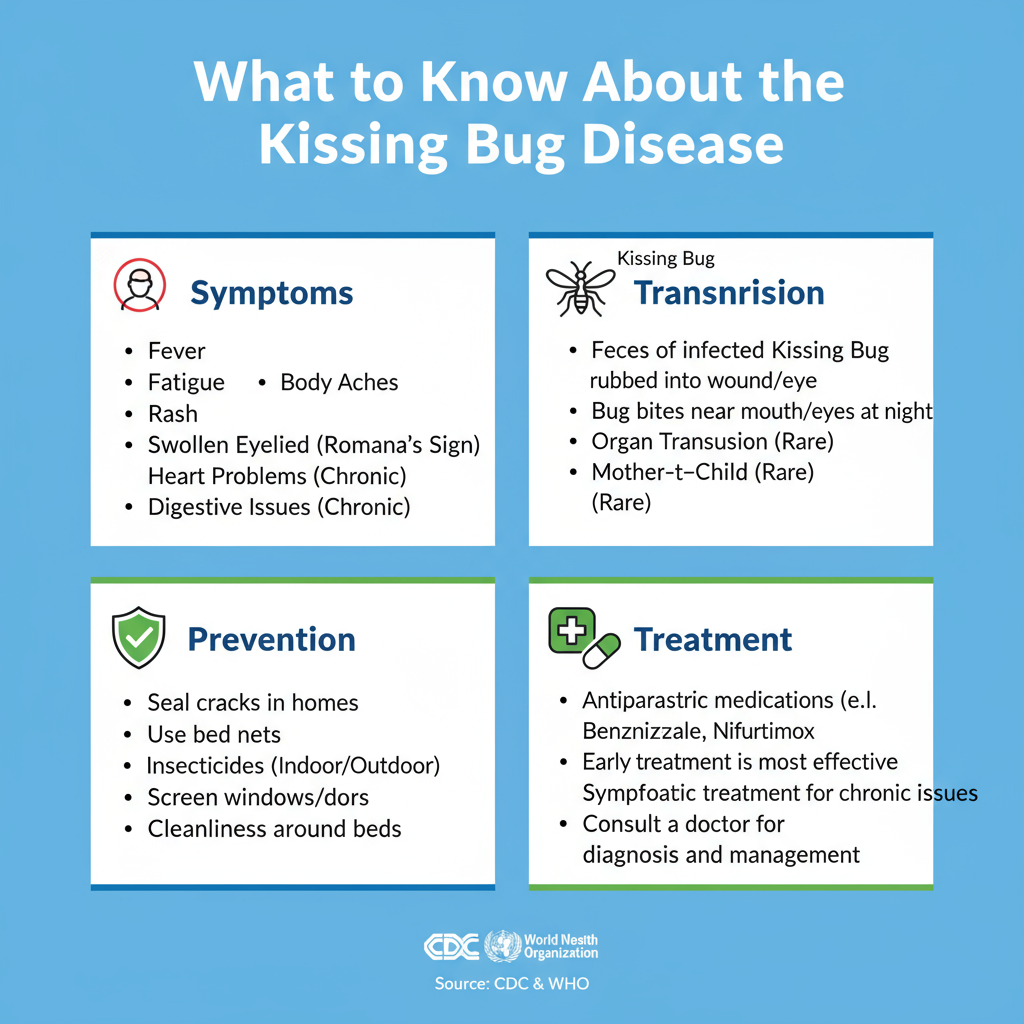
Chagas disease can be tricky because many infected people do not notice early symptoms or are completely asymptomatic. When symptoms do appear, they often resemble flu-like conditions—fever, fatigue, swelling at the infection site, headaches, and sometimes swelling of eyelids.
The concern, however, lies in the chronic phase that may develop years later. This can lead to:
-
Severe heart conditions, including irregular heartbeat and heart failure
-
Digestive system problems such as enlarged esophagus or colon
-
Neurological issues in some cases
Recognizing the disease early can make a big difference because medications like benznidazole and nifurtimox are effective when given soon after infection.
How is Chagas Disease Transmitted?
-
Through contact with feces of infected kissing bugs entering the body
-
Blood transfusions or organ transplants from infected donors
-
Congenital transmission from mother to baby during pregnancy
-
Rarely through contaminated food or drink
Current Situation: Why It Matters Now
While Chagas disease has been endemic in Latin America for decades, recent studies confirm that it is now endemic in the United States, with local transmission reported in at least eight states, including Texas, Arizona, and Louisiana. Approximately 300,000 people in the U.S. are thought to be infected, though many remain undiagnosed.
Experts say that climate change and increasing insect populations contribute to the expanding habitat of kissing bugs, heightening the risk in new regions.
Preventing Kissing Bug Bites and Chagas Disease
To protect yourself and your family:
-
Seal cracks and gaps in walls, windows, and doors to prevent bugs entering living spaces
-
Use bed nets treated with insecticide, especially when sleeping in infested areas
-
Avoid sleeping outdoors or in poorly constructed homes where bugs thrive
-
Keep yards free from wood piles, rocks, and rodent habitats which attract kissing bugs
-
Regularly inspect pet areas and sleeping quarters as bugs often feed on animals
Treatment and Medical Care
If you suspect infection:
-
Early diagnosis via blood tests can detect the parasite or genetic material of T. cruzi
-
Antiparasitic medications are most effective in the acute stage but can be used later
-
Managing symptoms and preventing cardiac or digestive complications is key in chronic cases
-
Blood donations and organ transplants are screened rigorously to prevent spread
Questions About Kissing Bug Disease
What exactly is a kissing bug, and why is it dangerous?
A kissing bug is a nocturnal insect that feeds on blood, often biting humans near the mouth or eyes—hence the name. It is dangerous because it can carry a parasite called Trypanosoma cruzi, which causes Chagas disease, a potentially serious illness affecting the heart and digestive system.
How can I identify a kissing bug bite?
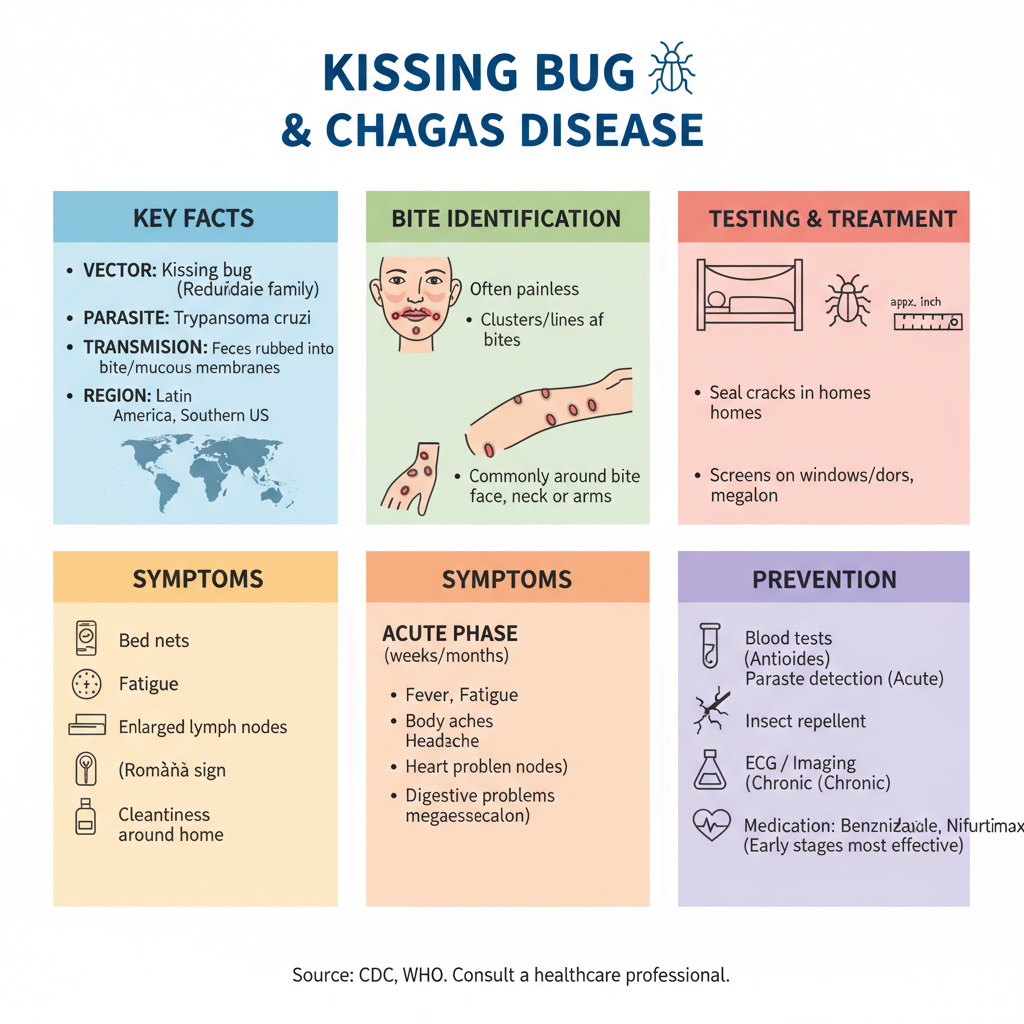
Kissing bug bites usually appear as small, itchy red bumps, often clustered in areas like the face, neck, or arms. Some people may experience swelling or a burning sensation around the bite site. However, bites can be confused with other insect bites, so monitoring symptoms after a bite is important.
Can kissing bugs be found in my state?
Kissing bugs are found mainly in southern and southwestern U.S. states such as Texas, Arizona, Louisiana, and parts of California and Florida. However, their range is expanding due to changing climates, so they could be present in other states as well. Checking local health department updates is advisable.
What are the symptoms of Chagas disease?
Early symptoms may be mild or absent but can include fever, fatigue, body aches, swelling near the bite, and swelling of the eyelids. Chronic infection can cause serious heart problems, digestive tract issues, and sometimes neurological symptoms years later.
How is Chagas disease treated and prevented?
Treatment includes antiparasitic medications like benznidazole and nifurtimox, most effective in the early stages. Prevention focuses on avoiding kissing bug bites by sealing homes, using bed nets, and reducing insect habitats near living areas.
Are pets at risk from kissing bugs?
Yes, pets like dogs and cats can be bitten by kissing bugs and may develop Chagas disease. Pet owners in endemic areas should take protective measures and consult veterinarians if symptoms appear.
How do climate change and urbanization affect kissing bug populations?
Warmer temperatures and changing weather patterns expand the habitat suitable for kissing bugs, increasing their numbers and range. Urbanization can sometimes create new environments for these bugs by increasing rodent populations and providing shelter spaces.
Where can I get tested for Chagas disease?
Testing is available through healthcare providers and specialized laboratories via blood tests. If you suspect exposure or show symptoms, consult your doctor or local health department to get tested promptly.
Visual Overview: Kissing Bug Disease Facts
The ‘kissing bug’ and Chagas disease may have flown under many people’s radar, but in 2025, awareness is growing globally. Understanding how the disease spreads, its symptoms, and preventative steps is crucial, especially for those living in or traveling to affected areas.
Simple home and lifestyle changes can reduce risks significantly, and early medical intervention can save lives. Staying informed, practicing good hygiene and home maintenance, and consulting healthcare professionals if you experience symptoms or suspect exposure will keep you protected.
With this knowledge, the kissing bug’s bite doesn’t have to be a cause for fear—it becomes a call for vigilance and smart action.
