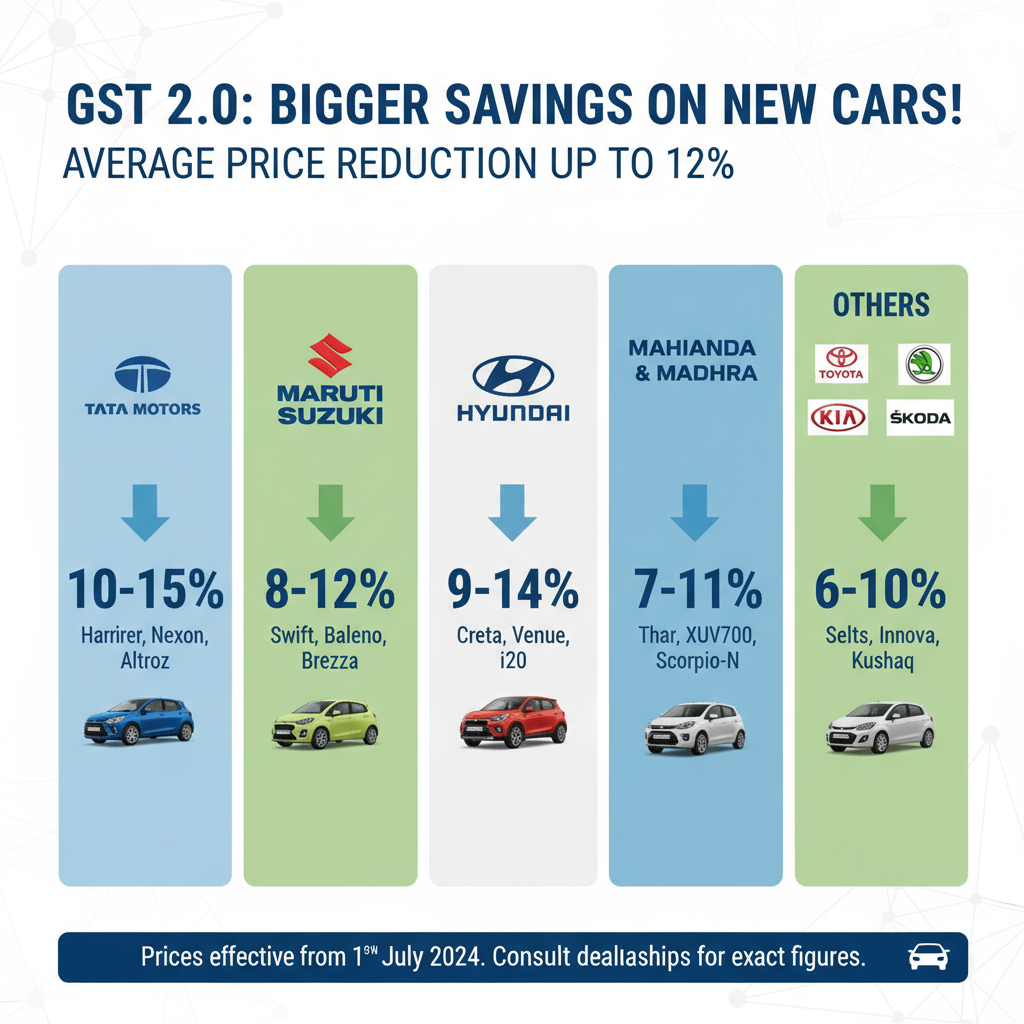
India’s automobile market just got a major shake-up, thanks to the GST 2.0 reforms announced at the 56th GST Council meeting in September 2025. For car buyers, this means new price tags, bigger savings, and more buying power than ever before. Let’s break down the implications, car-wise price drops, and what makes this such a trending topic in the auto industry.
Understanding GST 2.0: What’s Changed?
-
Small cars (including sub-4m, petrol or diesel variants) now attract just 18% GST—down from the earlier 28%.
-
Luxury cars and bigger SUVs (over 4m, high-capacity engines) now come under a straight 40% GST slab, but the previous cess has been eliminated, resulting in a lower tax burden than before.
-
EVs and hybrids retain their low GST rates, giving buyers even more reason to go green.
-
These changes impact the ex-showroom price, which then trickles down to savings on road tax and insurance premiums as well.
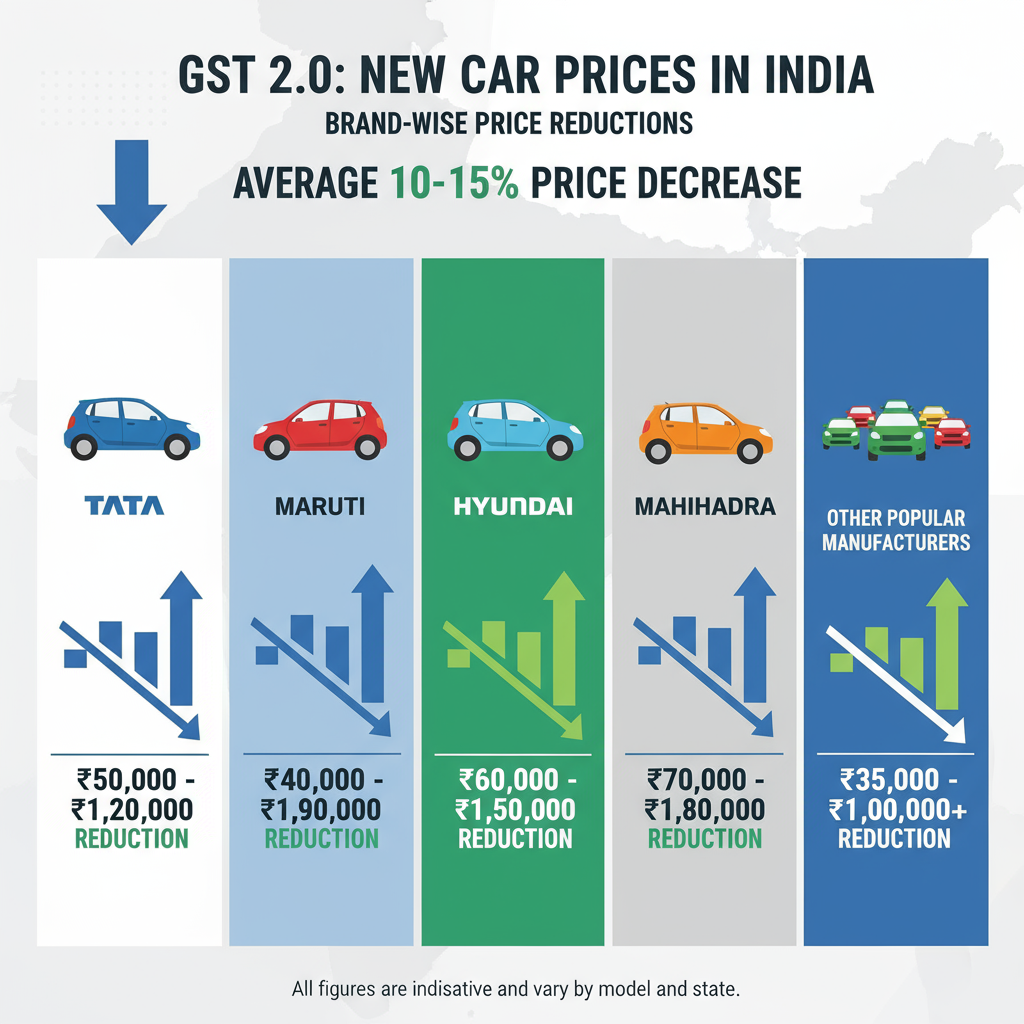
Car-wise Price Drops: Tata, Maruti, Mahindra, Hyundai, Skoda & More
Tata Motors
-
Safari: Up to ₹1.45 lakh off
-
Nexon: ₹1.55 lakh reduced
-
Punch: ₹85,000 shaved off
-
Altroz: ₹1.1 lakh lower
-
Tigor: ₹80,000 less
-
Harrier: ₹1.4 lakh cut
Mahindra
-
XUV 3XO Diesel: ₹1.56 lakh off
-
Bolero Neo: ₹1.27 lakh reduced
-
Thar: ₹1.35 lakh dropped
-
Scorpio N: ₹1.45 lakh lower
-
XUV 700: ₹1.43 lakh cut
Maruti Suzuki
-
S-Presso: Up to ₹1.29 lakh off
-
Alto K10: ₹1.07 lakh lower
-
Brezza & Fronx: Up to ₹1.12 lakh reduced
-
Wagon R: Up to ₹79,600 cut
-
Swift: Up to ₹1 lakh off
-
Dzire: Up to ₹1.07 lakh off
Hyundai
-
Creta: Up to ₹90,000 lower
-
Grand i10 Nios: ₹73,800 cut
-
Aura: ₹78,400 off
-
Exter: ₹89,200 cut
-
i20: Up to ₹98,000 off
-
Venue: Up to ₹1.2 lakh dropped
Skoda, Toyota, VW, Kia, MG & Others
-
Skoda Kodiaq: ₹3.3 lakh lower (luxury tax eliminated)
-
Slavia: ₹63,000 off
-
Kushaq: ₹66,000 cut
-
Kylaq: ₹1.19 lakh reduced
-
Other manufacturers like Toyota Innova Crysta, Kia Seltos, VW Polo, and Honda City also see significant reductions, especially in entry-level and mid-segment models.
Impact: Who Benefits Most?
-
First-time car buyers and families: Entry-level and compact cars are now significantly more affordable, solving the ‘affordability puzzle’ for many urban and rural Indian households.
-
SUV seekers and luxury buyers: Surprisingly, even larger SUVs and previously high-tax luxury models see actual price cuts or, at minimum, stable pricing due to cess elimination.
-
EV and hybrid fans: Continued low GST rates mean the upfront costs of cleaner cars remain the best value proposition.
-
Automakers: Expect a demand revival, with reports already predicting a festive season boom.
Some Facts
-
What is GST 2.0 and how does it change car prices in India?
GST 2.0 is the latest revision of India’s Goods and Services Tax, effective September 2025. It introduces lower tax rates for small, mid-size, and even some luxury cars, slashing the overall tax burden by eliminating the hefty cess on larger vehicles. As a result, car manufacturers have cut ex-showroom prices—even for top-selling models—making new cars more affordable than before.
Which cars have received the biggest price drop?
Biggest reductions are seen in Tata (Safari, Nexon, Punch), Mahindra (Thar, XUV 700, Bolero Neo), Maruti Suzuki (Alto K10, S-Presso, Swift), Hyundai (Venue, i20, Creta), and Skoda (Kodiaq, Slavia) lines. Luxury models like Skoda Kodiaq enjoy cuts up to ₹3.3 lakh, while popular family cars and SUVs report ₹1–1.5 lakh reductions, depending on the variant.
Does the new GST rate apply to used cars or only new purchases?
GST 2.0 rate changes apply only to newly registered vehicles purchased from September 22, 2025, onwards. Used car transactions retain the previous GST rules unless directly clarified by policy updates; buyers should confirm with dealers for specific cases.
How will the price reduction impact car loan EMIs and insurance?
Lower ex-showroom prices mean you borrow less, reducing the principal amount for a car loan and resulting in smaller monthly EMIs. Insurance premiums also drop, as they are based on car invoice value, so you save on both fronts—making ownership easier and more affordable overall.
Is it the right time to buy a car before the festive rush?
Absolutely! With GST 2.0-driven price drops, upcoming festive offers, and increased supply from dealerships, buying now means maximizing savings while avoiding future waitlists. Early buyers can also benefit from additional discounts and priority delivery, making this the most opportune moment in recent years to invest in a new car.
Expert Tips for Buyers
-
Timing Matters: New GST rates kick in for all cars purchased from September 22, 2025, onwards.
-
Compare Models: If you’re on the fence, check the exact price drop on your preferred models—some discounts go as high as ₹1.5 lakh or more.
-
Consider On-Road Savings: Lower ex-showroom prices mean lower taxes and insurance, reducing the total cost of ownership.
-
Explore Hybrids/EVs: The already-low GST rates on electric and hybrid vehicles make them even more appealing, especially as fuel prices rise.
How Car Brands Responded
Major automakers wasted no time—Tata, Mahindra, Maruti Suzuki, Hyundai, and Skoda revised prices within days to align with GST 2.0, strengthening their festive offers and marketing pushes. Showrooms across the country are now advertising price-cuts aggressively, hoping to lure buyers before more segment competitors join the fray.
Conclusion: The Road Ahead
GST 2.0 is more than just a tax reform—it’s a catalyst for affordable mobility, market growth, and financial relief for millions. Whether upgrading, buying a first car, or switching to a greener ride, now is the moment for smart shoppers.
Car prices aren’t just numbers—they’re signals for consumer confidence, industry innovation, and economic growth. Stay tuned to auto news for further updates, and shift gears for a more affordable drive!
